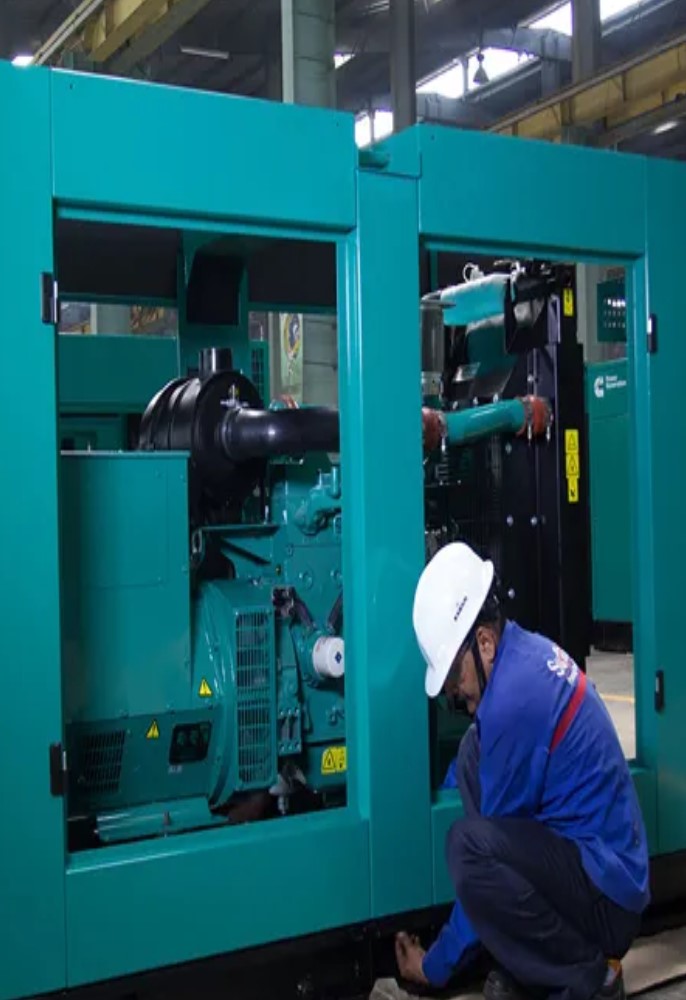
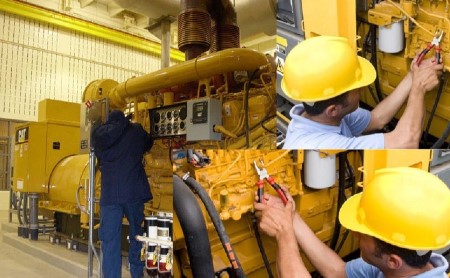
Installing a Diesel Generator (DG) Set involves several steps to ensure proper setup and safe operation. DG sets are commonly used for backup power generation in various applications, such as homes, businesses, industries, and events. Here’s an overview of the installation process:
Site Preparation:
Choose an appropriate location for the DG set installation. It should be well-ventilated, away from flammable materials, and comply with local regulations.
Ensure there’s enough space for maintenance and easy access to the generator and control panels.
Foundation and Mounting:
Prepare a strong and level foundation to support the weight of the DG set.
Place the DG set on the foundation and securely anchor it to prevent vibrations during operation.
Electrical Connections:
Hire a licensed electrician to connect the generator to the main electrical system.
Install an Automatic Transfer Switch (ATS) or Manual Transfer Switch (MTS) to seamlessly switch between the main power supply and the generator during power outages.
Fuel System:
Install a fuel storage tank, preferably located near the DG set for easy refueling.
Ensure proper ventilation and safety measures for the fuel storage area.
Connect the fuel lines from the storage tank to the generator’s fuel inlet.
Exhaust System:
Install an exhaust system to safely direct exhaust gases away from the installation area.
Ensure the exhaust system complies with local regulations and doesn’t pose a risk to occupants.
Cooling System:
Set up the cooling system, which may involve installing radiators, fans, and coolant circulation components.
Ensure proper ventilation and cooling to prevent overheating.
Control Panel and Wiring:
Connect the generator’s control panel, which includes instruments for monitoring and controlling the DG set’s operation.
Properly wire the control panel and interlocks for safety.
Battery and Starting System:
Install a suitable battery and charging system for starting the DG set. Ensure it’s in a safe and accessible location.
Ventilation and Airflow:
Adequately ventilate the installation area to dissipate heat and exhaust gases.
Install fans and ducting if required for improved airflow.
Compliance and Safety:
Ensure that the installation adheres to local building codes, safety regulations, and environmental standards.
Obtain any necessary permits or approvals before starting the installation.
Testing and Commissioning:
Once the installation is complete, test the DG set under load and verify that it starts, runs, and switches over smoothly.
Perform regular maintenance checks and tests to ensure the DG set’s reliability.
It’s important to note that DG set installation should be carried out by qualified professionals who are familiar with the specific requirements of the equipment and local regulations. Improper installation can lead to safety hazards, operational issues, and legal complications. Always consult with experts and manufacturers’ guidelines to ensure a successful and safe DG set installation.